Status Report 1
Patch 51
This version of Duelyst is based on patch 0.51 (mid November 2015). The opinion of many people is that this is the best Duelyst has ever been. Historically, the game exploded in popularity between October 2015 and January 2016, and reached its peak popularity in that time period.
Late 2015 was when Duelyst's competitive scene was the biggest it's ever been, with biweekly tournaments drawing about 100 entrants. The premier tournament series at the time was *King of the Beta*, run by Acrotar. You can find some of the past brackets on battlefy and many of the vods on Twitch.
Here are some of the most important cards from patch 51:
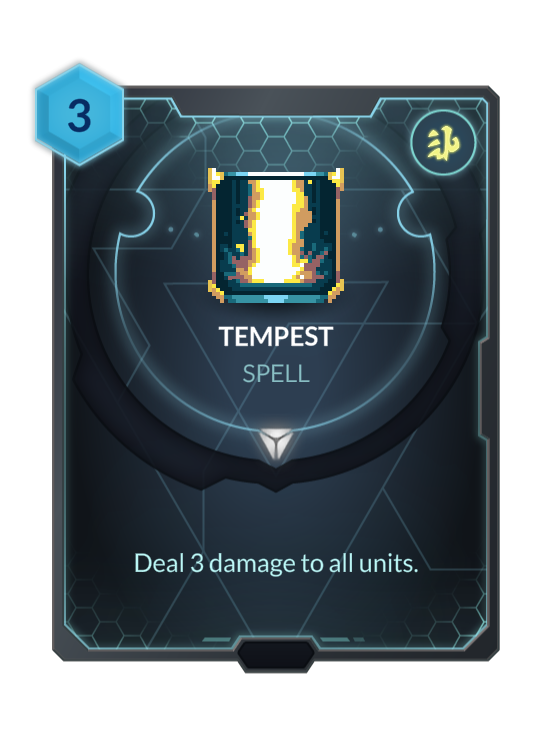
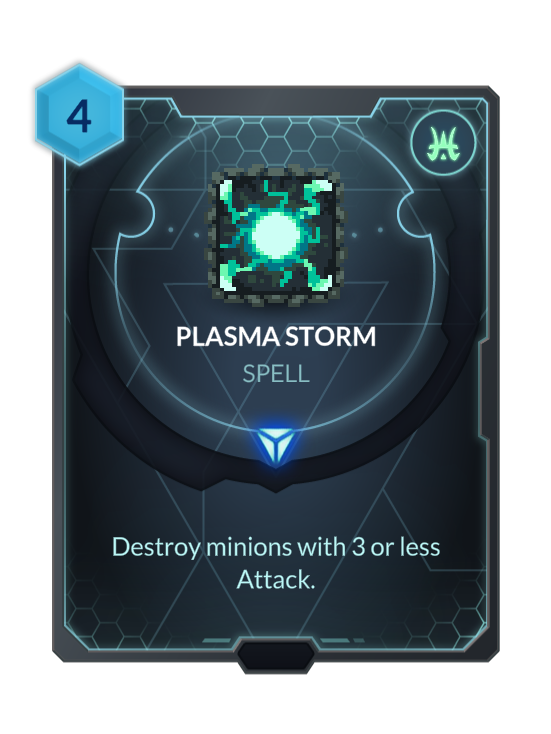
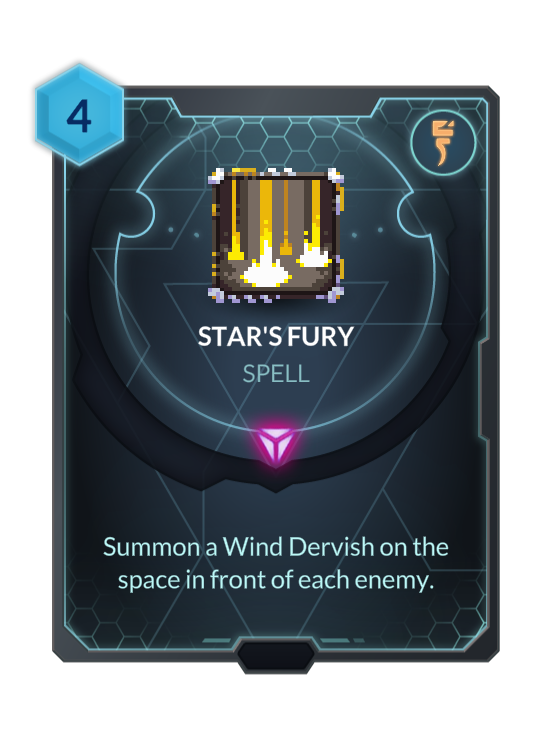
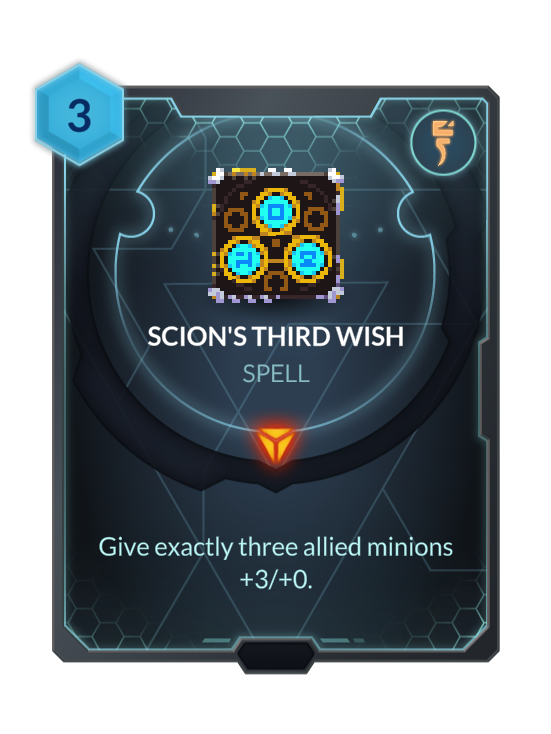
The Star's Fury + Third Wish combo, which forces players to play in a long line, and the extremely powerful AoE in Tempest and Plasma Storm serve to slow the pace of the gameplay down immensely. Not only do they have an effect in matches they're present in, but they shape the meta: decks that plan to snowball unanswered early-game threats are inherently worse choices so are seen less often. Conversely, late-game threats like Pandora were more common. With the slower pace of gameplay and stronger comeback mechanics, the game feels to me like it's more strategic and sees the better player winning more often.
My biggest concern with patch 51 is how weak Abyssian and Vanar are. I'll revamp them in pretty radical ways so that they can compete with the other four factions, with a priority on ensuring that they're compatible with the overall philosophy behind the cards already present.
Competitive integrity:
When Duelyst 2 was the only 2draw version of the game, I felt it was best for everyone for the game to have broad appeal, and in particular have a bigger emphasis on supporting casual archetypes that I wouldn't want to see in tournament, like Sarlac. For this version of Duelyst, which will coexist with Duelyst 2, I think it's better to have more focused goals, and I want to focus on making a serious competitive game where the better player wins as much as possible, and spends their time in a match dealing with things that are fun in the context of competition.
Because I have this goal, I'll be much more heavy-handed when it comes to nerfing cards that are complained about from the perspective of competitive integrity. These tend to be strategies that are some combination of offbeat, linear, hard to interact with, highrolly, extreme in some way, or much easier to play with than against. Some examples that immediately come to mind for me are Sarlac, Owl, face-y Spellhai, and burn.
This will lead to cards in the game having pretty uneven power levels: some cards will be much much stronger than others. My focus right now is very much on making the in-match experience enjoyable, and not on exactly how unplayable Sand Burrower is. The fact that a card sucks is not as important as ensuring the actual matches people play are fun.
Moreover, there are a couple cards you may be familiar with that didn't exist in patch 51, which I haven't added and don't intend to add. Four cards I'll talk about here are White Widow, Wings of Paradise, Dreamgazer, and Araki Headhunter. I didn't add White Widow primarily because in my experience it's incompatible with what the target audience thinks of as competitive gameplay. A second reason I didn't add White Widow, and the main reason I didn't add Wings of Paradise, is because I think it's a mistake to make replaces a commodity like this. I would prefer if replace stayed as a pure card selection mechanic, instead of becoming foremost a synergy piece. I didn't add Dreamgazer and Araki for a different reason: I think tempo decks looking to snowball early game board advantages will be highrolly in this version of Duelyst: Tempest and Plasma storm stonewall those strategies, so I fear matches will come down to matchup or luck of the draw.
Iteration
"In my experience, people most like the time in Duelyst history when they either started or started playing seriously and this period is heavily correlated with learning, i.e. what makes Duelyst fun for people is learning it, and I want that to be a continuous process rather than a one off thing.
I don't think balance really matters, but what does matter is having many viable archetypes and decks, non-static metas and making sure people feel like their decisions inside and outside the game matter"
In pursuit of the goals Maser outlines above we'll change the game often. Prioritizing obscuring power levels over objective balance will help give players opportunities to learn. Duelyst tends to be very sensitive to small details, and changing only a few cards can significantly impact the overall experience of playing the game. This particular property of the game is harmonious with our philosophy.
Additionally, we want this version of Duelyst to be a high-skill game where your decisions matter, and for losses to be avoidable, so that players can learn from their mistakes. We value this for its own sake, but and also because it synergizes with our desire to make archetype power levels unclear. Moreover, Duelyst in-match gameplay has a lot of richness to it, and it is a different kind of learning to explore it deeply. To give players the opportunity to also experience that kind of learning, we'll want some stability in the core skillset that Duelyst demands.
Specific short-term goals
In patch 51 Abyssian and Vanar were regarded as much weaker than the other four factions. My biggest immediate concern from a gameplay design perspective is to give these factions ways to play that are fun even when strong enough to win a tournament. This is a difficult goal that is sensitive to many factors.
One key consideration is that top-tier archetypes should allow for counterplay, so that your in-match decisions matter. I think Duelyst archetypes are at their most fun when they are better described as an obstacle course for your opponent than a source of excitement and entertainment for the player playing the archetype. Flavour considerations yield many tempting possibilities for what to have factions do, yet for most of them I don't see how to turn them into something that is primarily an obstacle course for the opponent.
Abyssian:
In looking to buff Abyssian, I initially considered pushing Creep, Big Abyss, Dying Wish synergy, "Control", and Swarm. All five of these seem problematic to me in some way right now, and while they've all seen some buffs, I was dissatisfied with the prospect of any of them, in the way I was imagining, constituting the foundation of the faction's ability to participate at a top level competitively. Briefly, the issues I had were that Creep, Big Abyss, and Dying Wish synergy conceptually didn't have sufficient counterplay, either tactical or strategic, for me to see how to get that "obstacle course" feeling I'm looking for, "Control" isn't really supported right now and is thus missing some key idea to make it feel unique to play with and against, and Swarm in a meta so defined by AoE seemed like it'd have to be so strong that in the absence of AoE it'd be overwhelming, leading to matchup and draw randomness while minimizing its selling point of fostering technical skill-intensive.
My search to find a healthy basis for Abyssian will be ongoing and work in tandem with our desire for frequent meta shakeups. At the time of writing, I'm exploring
> Breath of the Unborn - 6 mana spell, "Deal 3 damage to each enemy for each unit nearby that enemy."
This version of Breath of the Unborn is very different from the previous one, and I intend it to serve a very different function. I think this card's implications are hard to discover at a glance. I'd like to present some of what I'm hoping for with this card so that the PTR testing might be more helpful.
I want this card to be one which the opponent must play around. I expect that an opponent who plays as if this card doesn't exist will lose badly, and I think people will start positioning in extreme unique ways, like how they line up against Vet to play around Star's + Third Wish.
I want this card to be a matchup-defining card, with the game in large part revolving around how much it can be mitigated. It is in many ways a win condition, with the Abyss player being able to make progress towards winning the game by amassing minions on board, not unlike Razorback-based strategies.
I want it to be flexible in how it's used in a match. I expect that often the most important part of the card will be the damage to the enemy general, but hopefully often its ability to clear will be very relevant. Ideally players will have to make hard choices about how to use the card. Related, I want it to be unclear how best to make use of the card from a deck-building perspective.
Overall, this card is very speculative and experimental. I think there is some potential, but I expect to have to iterate, and I think it's very possible that there end up being fundamental flaws with the idea.
Vanar:
Right now I view Vanar as pursing two different avenues attempting to create the basis for a tier 1 archetype.
The first approach is via global SotW. This supports Tempo Vanar, but I worry that with the ubiquity of AoE that archetype might lead to matchup and draw randomness. In fact, I'm hoping that it'll turn out to be overall more powerful to use this SotW in slower midrange decks, and I think those would be a great choice to represent Vanar at the highest level. The main issue I see is that this SotW is obviously really broken. We'll see what happens.
The second approach is via global Polarity. Polarity does a lot of different things but, because of its relatively low impact, needed to find itself in pretty ideal situations to justify itself, and those were too uncommon to make the card playable. By making it global I hope to alleviate this major weakness of the previous version, and get people to have fun messing with all the different things the card can do. Moreover, I'd like for the card to acquire the new functions of quasi-AoE. Ideally it'll be unclear how to best deckbuild around this card, and with the best-case scenario I can imagine being that players gravitate towards flavourful well-rounded decks that can justify playing bigger minions like Pandora because of the bit of extra burst Polarity grants.
Additionally, I tried to buff walls/vespyr/token-based strategies significantly. I'm skeptical that this deck will end up being the best way to play the faction because of all the AoE, and it also might not be ideal because of how it could lead to matchup variance. Nevertheless, this archetype is fun and popular, and I'd like it to be strong enough to see a substantial amount of play.
Some other things on my radar
I expect Songhai's Twilight Fox (5 mana 3/3 Lantern Fox with celerity from patch 51) to be polarizing, and the randomness in the spawn to be annoying. This was a faction-defining card and I view it as due diligence to try it as is and getting some experience instead of making assumptions, but simultaneously I am searching for tweaks to this card.
I don't want Spellhai to be the best way to play Songhai right now, just because that has been the situation in Duelyst 2 for so long, and I think people want something new. It's totally plausible to me that strategies based on Twilight Fox or Mask of Shadows with no resemblance to Spellhai might be what players gravitate towards, but if we see tons of Spellhai I intend to address that.
Portal Guardian, at 0/9, is really big. If it's too big, changing it to 0/8 seems like it'd be reasonable. Once again, I think the best course of action is to not do anything preemptively.
True Strike and Jaxi: It's very unclear to me how these cards will impact the meta, and having pings everywhere and stronger early game minions are both risks.